
Before deciding which environmental studies a project needs, it helps to understand what is already on the site, what surrounds it, and how the proposed work could affect those conditions.
Early in the planning process, often before a public agency can approve a project, project teams may need to answer questions that go beyond what is shown on engineering drawings. Are protected wildlife species present? Could ground disturbance affect archaeological resources? Might project activities generate noise near homes? Could work near a river require additional regulatory coordination?
These considerations can influence project design, environmental review, and construction planning. While not every project requires the same studies, understanding potential environmental requirements early can help avoid unexpected challenges and keep the approval process moving.
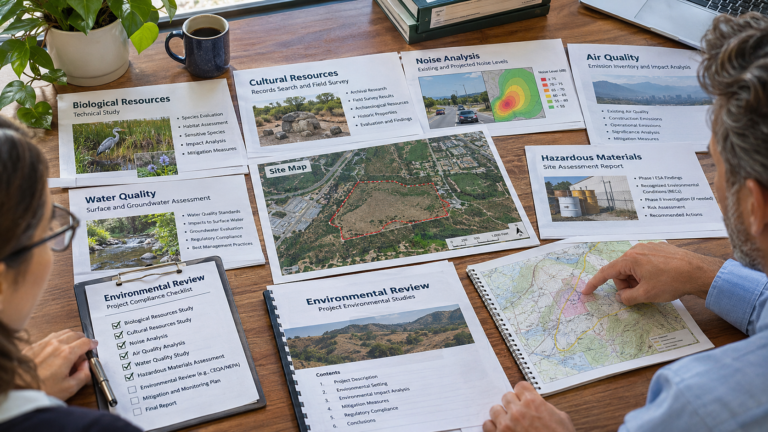
Start with the Project and its Setting
Evaluating environmental requirements begins with understanding what is proposed and where project activities may occur. The area that needs to be evaluated isn't always limited to where the finished project will stand. Temporary access roads, staging areas, grading, and vegetation removal can also affect the surrounding environment. Existing conditions and nearby land uses will point to and help the project team determine which technical studies are appropriate.
Common Technical Studies and Assessments
Comprehensive technical studies and assessments are essential components of the environmental review process, providing the scientific analysis and supporting documentation necessary to identify potential environmental impacts, evaluate project alternatives, and develop effective mitigation measures. UltraSystems assesses a broad range of CEQA topics and uses these studies to help public agencies, developers, and project stakeholders make informed decisions while ensuring compliance with applicable environmental regulations.
Biological Resources
Even developed areas can provide habitat for wildlife or contain sensitive vegetation. Biological studies help identify species, habitats, and natural resources that could be affected by a project. Depending on the site, these may include wildlife surveys, tree evaluations, or wetland assessments. Some surveys also need to be conducted during specific seasons when certain species are active.
Cultural and Tribal Cultural Resources
Not everything of historical or cultural importance is visible above ground. Archaeological surveys, historical research, and resource evaluations help identify sites, structures, or materials that could be affected by development. Tribal cultural resources may also require consultation with California Native American Tribes to ensure they are appropriately considered during environmental review.
Air Quality and Greenhouse Gas Emissions
Construction equipment, vehicle traffic, and ongoing project operations can generate emissions that affect air quality. Technical studies evaluate these potential effects, including dust, air pollutants, and greenhouse gas emissions. The findings help determine whether measures may be needed to reduce environmental impacts.
Noise and Vibration
Construction and future project activities can introduce new sources of noise, especially near homes, schools, or other sensitive locations. Noise studies use field measurements and modeling to understand existing conditions and estimate potential changes. Vibration may also be evaluated when heavy equipment or certain construction activities are involved.
Hazardous Materials and Site Conditions
A property's previous uses can reveal environmental concerns that are not immediately apparent. Former industrial activities, underground storage tanks, or other sources of contamination may require further investigation. Environmental site assessments help identify potential issues before excavation, demolition, or redevelopment begins.
Water Quality and Aquatic Resources
Projects near rivers, streams, wetlands, or drainage channels may affect water quality and sensitive aquatic habitats. Studies help identify these resources, assess potential impacts, and determine whether additional permits or protective measures are needed. Early evaluation can help project teams plan activities around environmental requirements.
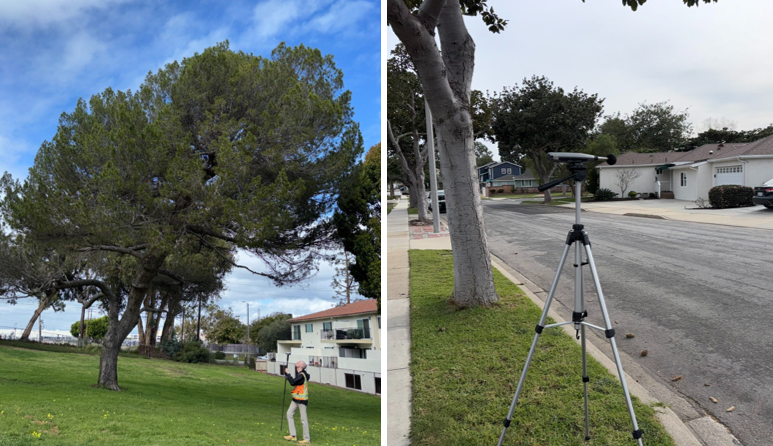
UltraSystems providing Environmental Studies in the Field: Tree surveys (left) and ambient noise monitoring (right) are examples of how field assessments help document existing conditions and identify potential environmental concerns during project planning.
Environmental Studies and Environmental Documents are Not the Same Thing
Technical studies provide information to evaluate potential effects and support decisions. They may inform California Environmental Quality Act (CEQA) documentation for applicable projects, National Environmental Policy Act (NEPA) review when federal actions are involved, permit applications, project design, or mitigation measures. For projects subject to CEQA, the lead agency determines the appropriate review path, including whether an exemption applies. Identifying a sensitive resource does not automatically establish which environmental document or permit is required.
Understanding Environmental Review and Approval Timelines
Environmental studies can be needed at different points in a project, not only limited to immediately before construction.
For projects subject to CEQA, the applicable environmental review must be considered before project approval. Under NEPA, federal agencies assess environmental effects before deciding on covered actions. Other studies may support permitting and design, while additional surveys and compliance monitoring may be required before or during construction.
The sequence depends on project activities, site conditions, seasonal survey windows, agency coordination, and consultation requirements. For project teams, timing can be just as important as identifying which studies are needed.
A biological survey that depends on species activity may need to occur during a particular season. Projects affecting waterways may require regulatory coordination and authorization before certain work begins. Cultural resource investigations or consultation may be needed during environmental review, with separate measures sometimes required before ground disturbance.
During early planning, project teams should confirm the proposed project footprint and temporary work areas, identify which environmental studies or permits may be necessary, and clarify which reviews must be completed before agency decisions or field activities. These questions do not need to have complicated answers. But addressing them early can help firms and agencies make informed decisions and give project teams a clearer path from planning and approvals through construction.
How UltraSystems can help. UltraSystems Environmental provides CEQA/NEPA documentation, technical studies, permitting, and construction compliance support across the State of California. Explore our services at ultrasystems.com/services/ or contact our team at ultrasystems.com/connect/.

About UltraSystems, founded in 1994, is a multi-disciplinary, full service environmental consulting and planning firm serving both the public and private sectors. The 30-year-old firm provides expertise in development planning; site selection and analysis; CEQA and NEPA compliance; technical studies, and environmental compliance during construction. UltraSystems Environmental is a certified DBE, SBE, and WBE company that is headquartered in Irvine, California.

Gabriela Cabrera BA, PGD is the Administrative Executive & Marketing Assistant at UltraSystems working on social media, newsletters, and proposals at the Irvine Headquarter office.